
The Price Promise Has to Survive the Click
Rove Concepts shows why price meaning, promotional clarity, and product proof should become more specific with every click.

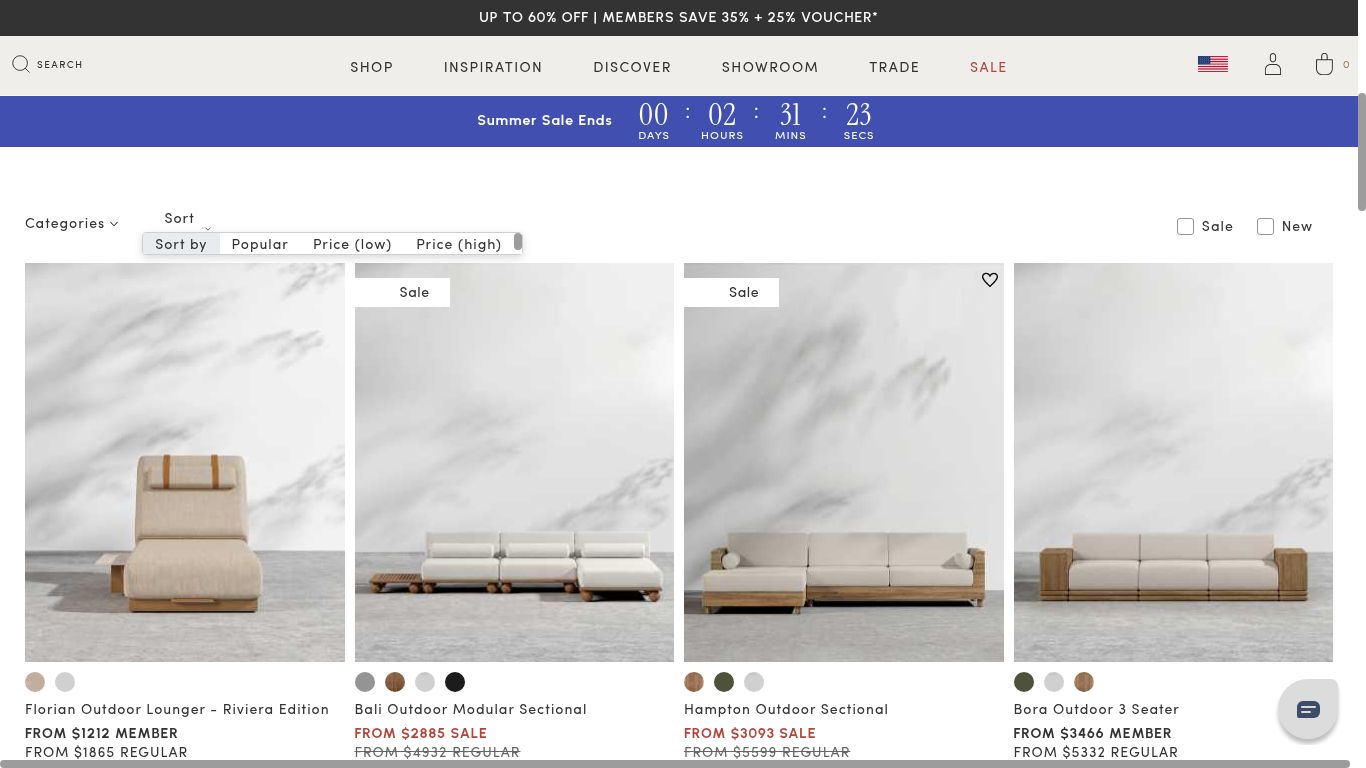
Rove Concepts presents its furniture with restrained photography and generous space. The opportunity is not to add more persuasion. It is to make the price, promotion, and proof become clearer as shoppers move toward a decision.
This independent teardown reflects public pages observed on July 21, 2026. Live sites change, so treat it as a study of useful patterns, not a verdict.
The teardown in one sentence
Every click toward a product should reduce uncertainty, not introduce a new interpretation of the offer.
The price changes meaning after the click
On the Outdoor collection page, the Hampton Outdoor Sectional showed “FROM $3093 SALE.” On the product page, $3,093 appeared again, this time labeled “Member.” The public sale price there was $4,759.
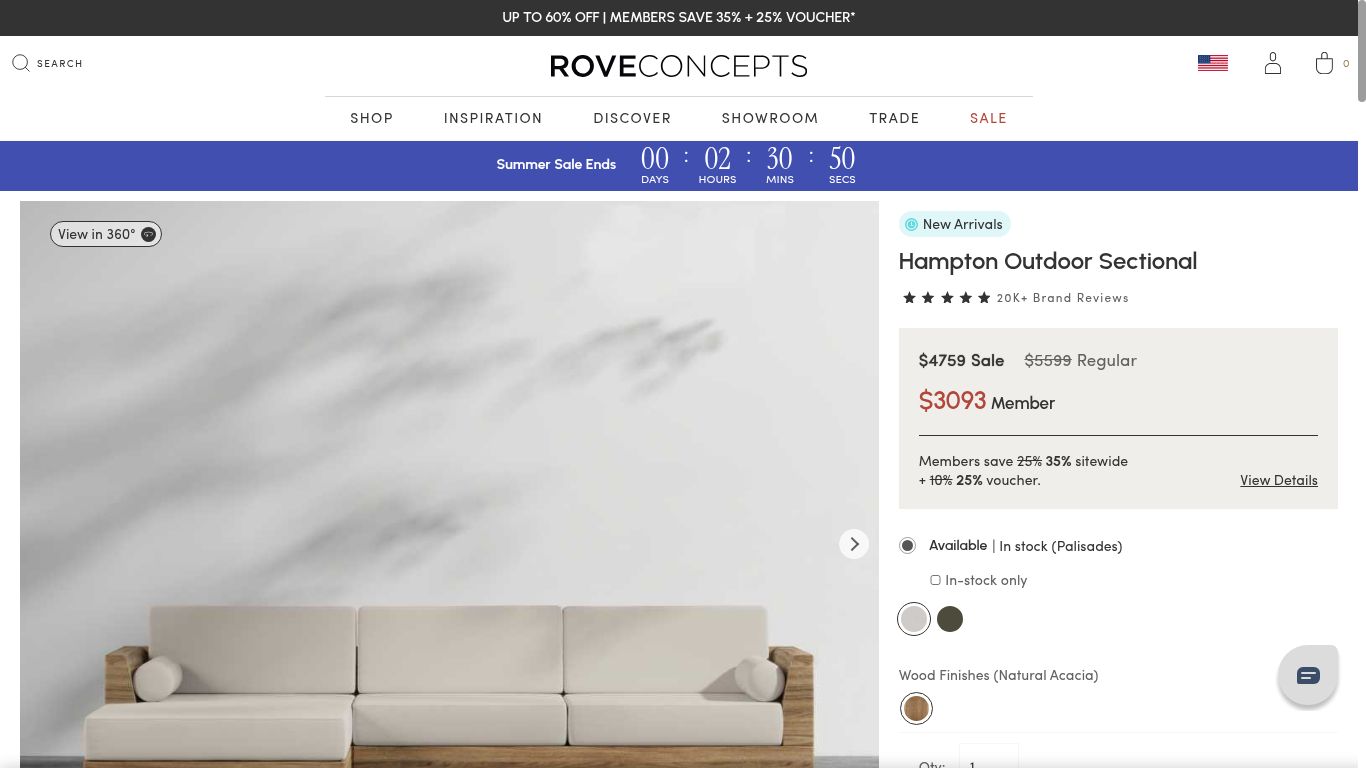
Member pricing is not the problem. The problem is that the advertised amount changes meaning after the click.
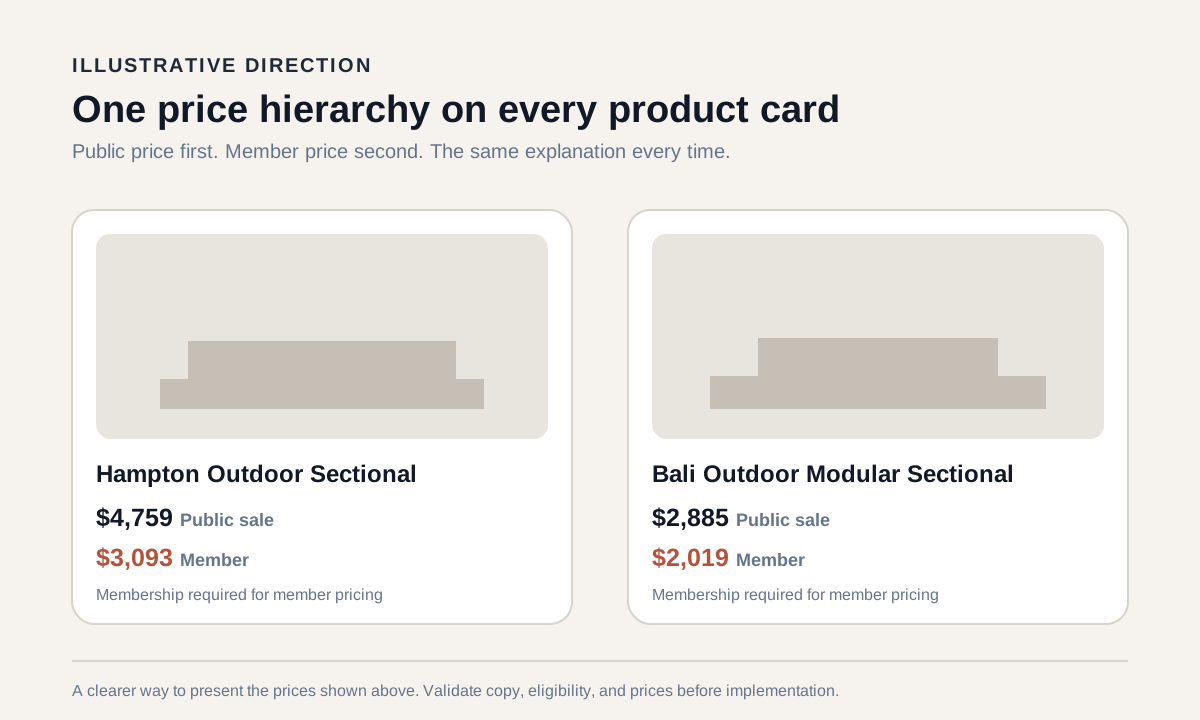
The mixed treatment also appears within collection grids, where neighboring products alternate between “SALE” and “MEMBER.” A clearer system would keep the public sale price and member price in the same order everywhere, with the membership requirement beside the lower amount.
One possible direction keeps the membership incentive while making the comparison easier to understand:
Promotion should clarify the offer, not multiply it
The same pricing journey also layers “UP TO 60% OFF | MEMBERS SAVE 35% + 25% VOUCHER*,” a “Summer Sale Ends” countdown, and a repeated “SUMMER SALE UP TO 60% OFF” message.
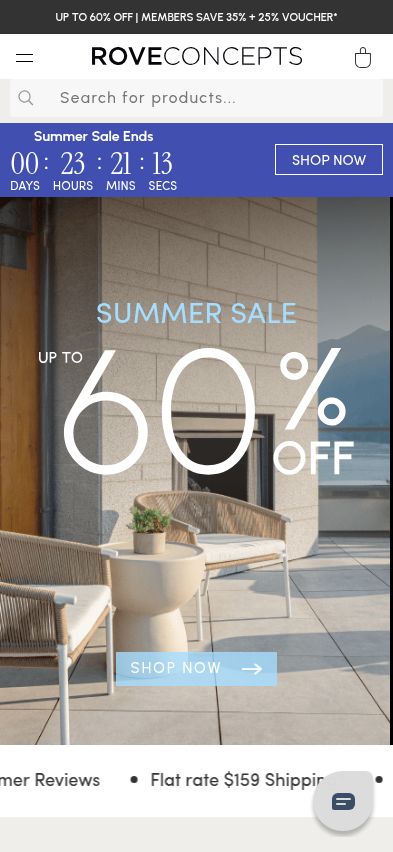
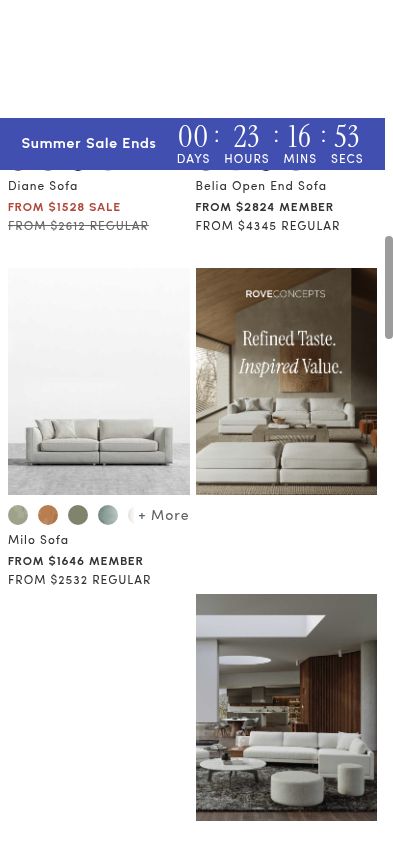
Each statement may be accurate on its own. Together, they make shoppers assemble the offer from several messages before comparing furniture.
Rove Concepts could lead with one primary promotion, keep one qualification close to it, and compare that treatment with a timer-free version. The goal is not less value. It is a faster path to understanding the value.
Brand reviews cannot answer product questions
On the Florian Outdoor Lounger page, the rating row under the product name read “20K+ Brand Reviews.”
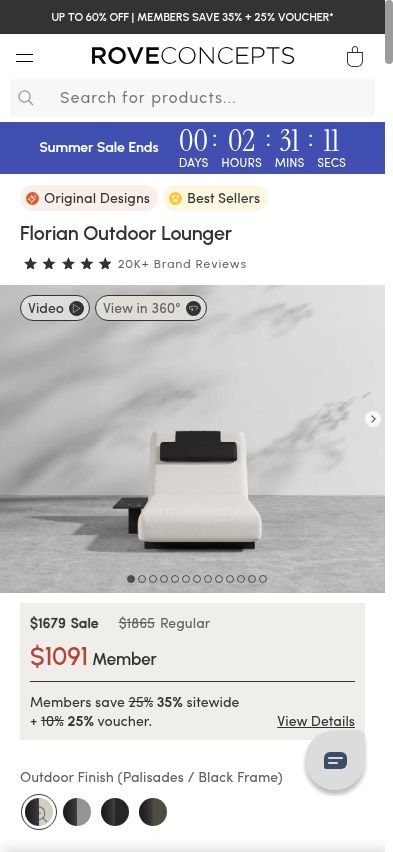
That is useful brand reassurance, but its position creates a product-level expectation. Beside a product name and star rating, shoppers are looking for proof about that piece.
Rove Concepts could show product-specific ratings and review counts here when enough product feedback exists, then move the broader brand total into a clearly labeled reassurance block. If a product has limited review volume, an honest low count is still more precise than a brand aggregate in a product-level position.
What Rove Concepts could test
- Use the same public-sale and member-price hierarchy on collection and product pages, with the membership requirement beside the lower amount. Compare product-page visits and membership starts with the current treatment.
- Replace the stacked discount messages with one primary offer and one qualification. Compare a timer-free version with the current countdown while measuring offer comprehension and add-to-cart behavior.
- Put product-specific ratings beside the product name when enough feedback exists, then move the brand total into a clearly labeled reassurance block. Compare review engagement and add-to-cart behavior.
Keep the promise, add the detail
As shoppers move closer to buying, the experience should become more specific without changing the meaning of what came before.
Check whether someone can explain the price, promotion, and proof after moving from a collection to a product page. If they need to reinterpret the offer or go backward, the journey has broken its promise.

See what deserves your attention first
Start with a free scan and get a revenue-ranked view of the conversion opportunities worth investigating.
Free baseline audit · No credit card · Optional free-trial follow-up